Naturalist, traveler, French-Polish herpetologist, interested in biodiversity and the conservation of herpetofauna – especially lizards. Member of the IUCN SSC Monitor Lizard Specialist Group, administrator and co-chair International Commission of the Société Herpétologique de France (SHF), and Director’s Board Member of Reptile Amphibian Conservation Europe (RACE)
Naturalist, traveler, French-Polish herpetologist, interested in biodiversity and the conservation of herpetofauna – especially lizards.
Get the latest updates, announcements, and stories straight from my Facebook page.
𝐍𝐚𝐭𝐮𝐫𝐞 𝐂𝐨𝐧𝐧𝐞𝐜𝐭 𝐢𝐬 𝐬𝐞𝐞𝐤𝐢𝐧𝐠 𝐝𝐞𝐝𝐢𝐜𝐚𝐭𝐞𝐝 𝐯𝐨𝐥𝐮𝐧𝐭𝐞𝐞𝐫𝐬 to support the Western Leopard Toad Underpass Project in Zeekoevlei, Cape Town, during the annual breeding season (July–October).
Nature Connect has installed six amphibian underpasses along Peninsula Road, supported by 400 metres of drift fencing on either side of the road, to reduce road mortality and support the conservation of 𝐭𝐡𝐞 𝐞𝐧𝐝𝐚𝐧𝐠𝐞𝐫𝐞𝐝 𝐖𝐞𝐬𝐭𝐞𝐫𝐧 𝐋𝐞𝐨𝐩𝐚𝐫𝐝 𝐓𝐨𝐚𝐝 (𝐒𝐜𝐥𝐞𝐫𝐨𝐩𝐡𝐫𝐲𝐬 𝐩𝐚𝐧𝐭𝐡𝐞𝐫𝐢𝐧𝐚). During the breeding season, barriers are erected and nightly patrols are conducted between approximately 18:30 and 21:30, primarily by volunteers and supported by Nature Connect staff.
In previous years, this project has benefited from the involvement of local volunteers and conservation students. However, recent seasons have highlighted the need for greater volunteer consistency to ensure effective monitoring and maintenance.
We are currently looking for volunteers interested in contributing in the following ways (note that these contributions are not limited to the activities listed below):
· Conducting night patrols and monitoring during the breeding season
· Assisting with the installation and maintenance of drift fencing and barriers
· Supporting data interpretation and analysis
· Assisting with and utilising AI-supported monitoring tools
This opportunity may be of particular interest to individuals with a background or strong interest in herpetology, conservation biology, ecology, or citizen science, but all enthusiastic and committed volunteers are welcome.
To express interest or to request further information, please contact:
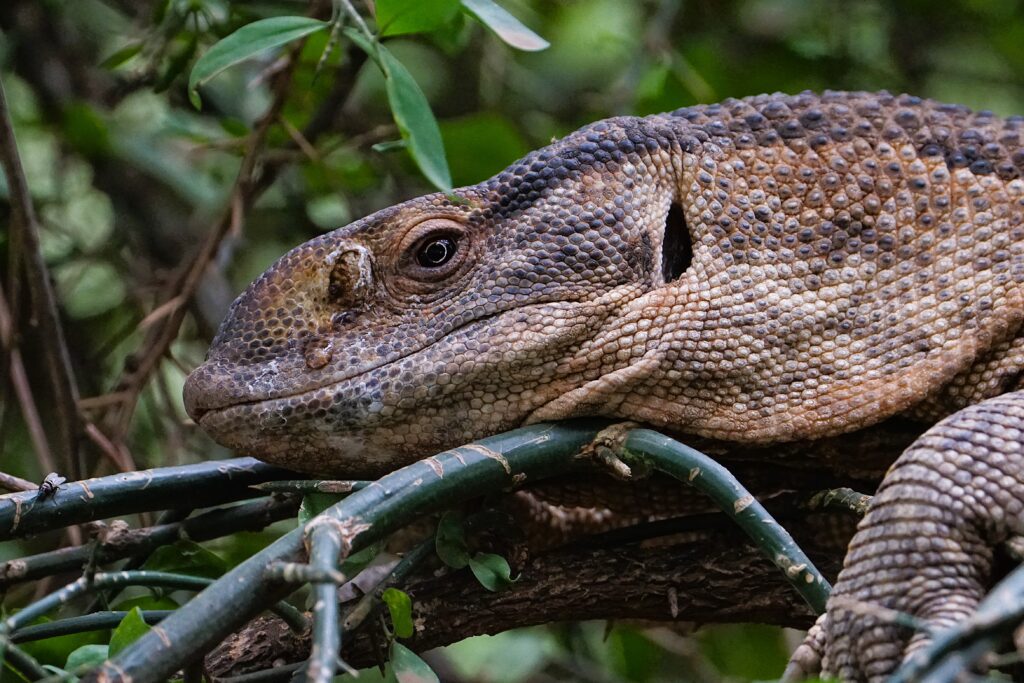
🦎 The Roughneck monitor, Varanus rudicollis (Gray, 1845), is a large (TL 146 cm), arboreal species although there are some reports of it being ground-dwelling. It is diurnal and native to primary and secondary rainforests in Myanmar, Thailand, Malaysia, and the islands of Penang, Sumatra, Riau, Bangka, and Borneo. Despite this wide range it is one of the most poorly studied varanid species as direct observations in the wild are very rare, especially as its prefers to shelter in tree hollows in dense jungle.
🕵 A newly published note presents the first documented, direct observations of mating in this species from northern Borneo.
👩🔬 The only details about the reproduction of this species come from captivity, clutches consist of 8–16 eggs (up to 3 clutches per year), proximately 4 weeks after mating, the incubation period of 152–190 days at 28–30°C, hatchlings measure 200–260 mm, and weigh 14–21.6 g.
👉 If you want more information, I encourage you to read the references:
ZDUNEK, P., DOMAGAŁA, M., TAKÁTS, B. (2025). Arboreal mating by rough-necked monitors Varanus rudicollis in Sabah, Malaysia. Herpetological Bulletin 174: 42-43.
For many years, it was believed that some vipers could not swim and were even prone to drowning easily. The habitat of some European vipers kept them away from water and the food associated with it.
🕵All this shows us that we can still discover new behaviors and learn about the nature that surrounds us.
🕵Many people saw vipers near the water, some saw them swimming, some saw them running into the water. It is so important to document knowledge and observations so they are not lost and can be shared with others.
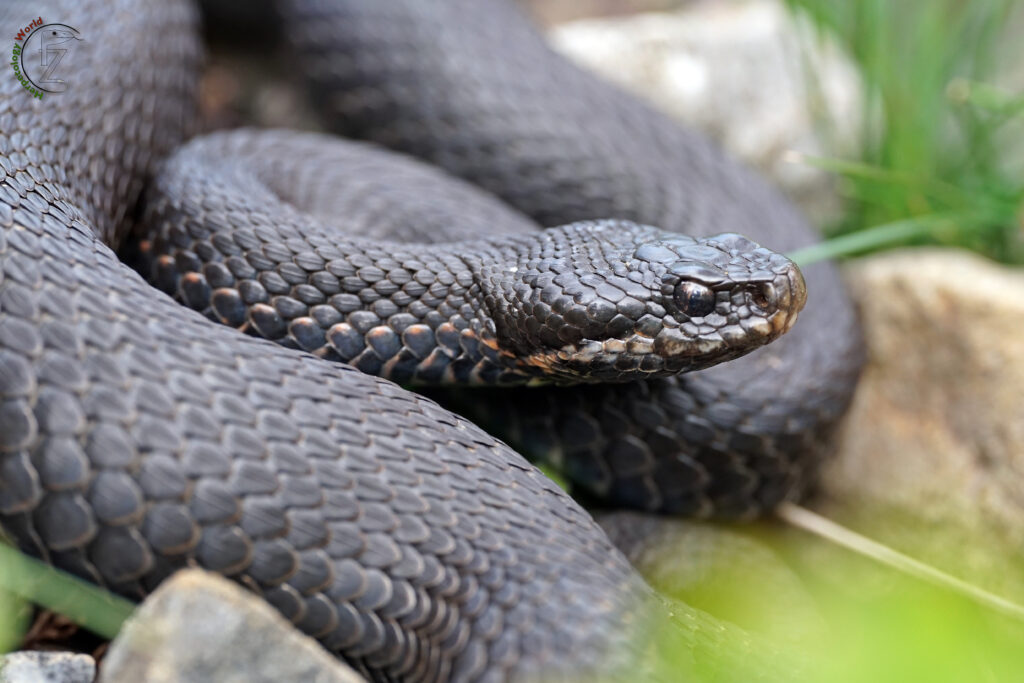
🐍How about a the Iberian Asp Viper, (Vipera aspis zinnikeri) that hunts frogs in the water? To devour their dead bodies moments later ?
🐸Hunting amphibians is not a behavior often documented for this species. Amphibians themselves are also not commonly found in this snake's diet.
☠️Add to this scavenging, which is also rare in snakes, and you get a picture of our recently published work.
🤝Together with my friends, we published all of these behaviors with detailed photos and videos. Matthieu Berroneau et Thierry Gagliano
🐍Snakes adapt to their environment through their behavior, diet choices, and opportunism.
🗝Observations such as these, even as single events, can broaden the scope of information about the natural history and the plasticity of the ecology and diet of vipers.
I invite you to read the full text; the link is in the comments.
👉 LIKE AND SHARE SO THAT THE KNOWLEDGE SPREADS @obserwujący
The publication of the European Red List of Amphibians, a comprehensive assessment that measures the pulse of biodiversity across the continent.
This report details the conservation status of every amphibian species native to Europe, with a geographical scope extending from Iceland to the Urals and from Franz Josef Land to the Canary Islands.
Caudal autotomy is a self-amputation, in which an animal voluntarily loses its tail. It is a defense mechanism that results in the regrowth of the tail at the place of its loss. Once broken off from the caudal vertebra (in the “zone of weakness”), the tail stump heals quickly, and regeneration begins. This process occasionally results in malformation, after which a tail furcation appears as a split or multi-branched tail. In taxa exhibiting tail regeneration, a new tail may develop even when the original one is not entirely detached, leaving the animal with a seemingly forked tail, which is termed caudal bifurcation.
Here, I present a note on this subject, written by Paweł Błęcki, Piotr Kazimirski (Herpetolog - Piotr Kazimirski), and Przemysław Zdunek, which was published in Przegląd Przyrodniczy, Volume XXXVI, 2025, Issue No. 2. (link in the comment).
Then, Zuzanna Purwin, from Jagiellonian University, presented the above report, along with additional information and graphics, in the form of a poster at SEH 2025 - 23rd European Congress of Herpetology (SEH 2025) in Bonn. The topic concerned a review of this type of anomaly in lizards in Poland, together with a new observation by Paweł Błęcki.
Scientific papers published in peer reviewed journals, posters, conferences… Everything related to science, documenting and spreading knowledge about herpetofauna!
My expertise covers a wide range of topics related to wildlife conservation: population studies, inventories, field research planning, and monitoring protocols in different biotopes (desert, forest, jungle, and urban areas).

𝐍𝐚𝐭𝐮𝐫𝐞 𝐂𝐨𝐧𝐧𝐞𝐜𝐭 𝐢𝐬 𝐬𝐞𝐞𝐤𝐢𝐧𝐠 𝐝𝐞𝐝𝐢𝐜𝐚𝐭𝐞𝐝 𝐯𝐨𝐥𝐮𝐧𝐭𝐞𝐞𝐫𝐬 to support the Western Leopard Toad Underpass Project in Zeekoevlei, Cape Town, during the annual breeding season (July–October).
Nature Connect has installed six amphibian underpasses along Peninsula Road, supported by 400 metres of drift fencing on either side of the road, to reduce road mortality and support the conservation of 𝐭𝐡𝐞 𝐞𝐧𝐝𝐚𝐧𝐠𝐞𝐫𝐞𝐝 𝐖𝐞𝐬𝐭𝐞𝐫𝐧 𝐋𝐞𝐨𝐩𝐚𝐫𝐝 𝐓𝐨𝐚𝐝 (𝐒𝐜𝐥𝐞𝐫𝐨𝐩𝐡𝐫𝐲𝐬 𝐩𝐚𝐧𝐭𝐡𝐞𝐫𝐢𝐧𝐚). During the breeding season, barriers are erected and nightly patrols are conducted between approximately 18:30 and 21:30, primarily by volunteers and supported by Nature Connect staff.
In previous years, this project has benefited from the involvement of local volunteers and conservation students. However, recent seasons have highlighted the need for greater volunteer consistency to ensure effective monitoring and maintenance.
We are currently looking for volunteers interested in contributing in the following ways (note that these contributions are not limited to the activities listed below):
· Conducting night patrols and monitoring during the breeding season
· Assisting with the installation and maintenance of drift fencing and barriers
· Supporting data interpretation and analysis
· Assisting with and utilising AI-supported monitoring tools
This opportunity may be of particular interest to individuals with a background or strong interest in herpetology, conservation biology, ecology, or citizen science, but all enthusiastic and committed volunteers are welcome.
To express interest or to request further information, please contact:
Imaanm@natureconnect.earth ... See MoreSee Less
0 CommentsComment on Facebook
𝐀𝐫𝐛𝐨𝐫𝐞𝐚𝐥 𝐦𝐚𝐭𝐢𝐧𝐠 𝐛𝐲 𝐫𝐨𝐮𝐠𝐡-𝐧𝐞𝐜𝐤𝐞𝐝 𝐦𝐨𝐧𝐢𝐭𝐨𝐫𝐬 𝐕𝐚𝐫𝐚𝐧𝐮𝐬 𝐫𝐮𝐝𝐢𝐜𝐨𝐥𝐥𝐢𝐬 𝐢𝐧 𝐒𝐚𝐛𝐚𝐡, 𝐌𝐚𝐥𝐚𝐲𝐬𝐢𝐚
🦎 The Roughneck monitor, Varanus rudicollis (Gray, 1845), is a large (TL 146 cm), arboreal species although there are some reports of it being ground-dwelling. It is diurnal and native to primary and secondary rainforests in Myanmar, Thailand, Malaysia, and the islands of Penang, Sumatra, Riau, Bangka, and Borneo. Despite this wide range it is one of the most poorly studied varanid species as direct observations in the wild are very rare, especially as its prefers to shelter in tree hollows in dense jungle.
🕵 A newly published note presents the first documented, direct observations of mating in this species from northern Borneo.
👩🔬 The only details about the reproduction of this species come from captivity, clutches consist of 8–16 eggs (up to 3 clutches per year), proximately 4 weeks after mating, the incubation period of 152–190 days at 28–30°C, hatchlings measure 200–260 mm, and weigh 14–21.6 g.
👉 If you want more information, I encourage you to read the references:
ZDUNEK, P., DOMAGAŁA, M., TAKÁTS, B. (2025). Arboreal mating by rough-necked monitors Varanus rudicollis in Sabah, Malaysia. Herpetological Bulletin 174: 42-43.
#varanids, #varanidae, #monitorlizards, #varanus, #squamata, #reptiles, #lizards, #lizard, #warany, #mating, #varanusrudicollis, #borneo, #roughneckedmonitor, #herpetofauna, #herpetologia, #jaszczurki, #wildlife, #dzikaprzyroda ... See MoreSee Less
4 CommentsComment on Facebook
🐍𝐕𝐢𝐩𝐞𝐫𝐬 𝐚𝐫𝐞 𝐥𝐢𝐤𝐞 𝐜𝐚𝐭𝐬, 𝐭𝐡𝐞𝐲 𝐚𝐯𝐨𝐢𝐝 𝐰𝐚𝐭𝐞𝐫, 𝐰𝐡𝐢𝐜𝐡 𝐝𝐨𝐞𝐬 𝐧𝐨𝐭 𝐦𝐞𝐚𝐧 𝐭𝐡𝐚𝐭 𝐭𝐢𝐠𝐞𝐫𝐬 𝐜𝐚𝐧𝐧𝐨𝐭 𝐬𝐰𝐢𝐦 !
For many years, it was believed that some vipers could not swim and were even prone to drowning easily.
The habitat of some European vipers kept them away from water and the food associated with it.
🕵All this shows us that we can still discover new behaviors and learn about the nature that surrounds us.
🕵Many people saw vipers near the water, some saw them swimming, some saw them running into the water. It is so important to document knowledge and observations so they are not lost and can be shared with others.
🐍How about a the Iberian Asp Viper, (Vipera aspis zinnikeri) that hunts frogs in the water? To devour their dead bodies moments later ?
🐸Hunting amphibians is not a behavior often documented for this species.
Amphibians themselves are also not commonly found in this snake's diet.
☠️Add to this scavenging, which is also rare in snakes, and you get a picture of our recently published work.
🤝Together with my friends, we published all of these behaviors with detailed photos and videos. Matthieu Berroneau et Thierry Gagliano
🐍Snakes adapt to their environment through their behavior, diet choices, and opportunism.
🗝Observations such as these, even as single events, can broaden the scope of information about the natural history and the plasticity of the ecology and diet of vipers.
I invite you to read the full text; the link is in the comments.
👉 LIKE AND SHARE SO THAT THE KNOWLEDGE SPREADS
@obserwujący
#reptile #reptiles #snake #serpent #squamata #squamates #squamate #vipere #vipera #viperaaspis #aspviper #spain #diet #frogs #wildlife #wildlifephotography #biodiversity #biodiversité ... See MoreSee Less
3 CommentsComment on Facebook
6𝐭𝐡 𝐩𝐨𝐬𝐭 𝐰𝐢𝐭𝐡 𝐝𝐨𝐰𝐧𝐥𝐨𝐚𝐝𝐚𝐛𝐥𝐞 𝐩𝐮𝐛𝐥𝐢𝐜𝐚𝐭𝐢𝐨𝐧
"A Natural History of the Emirates"
Free book with more than 700 pages.
With important chapter:
𝑻𝒆𝒓𝒓𝒆𝒔𝒕𝒓𝒊𝒂𝒍 𝑹𝒆𝒑𝒕𝒊𝒍𝒆𝒔 𝒂𝒏𝒅 𝑨𝒎𝒑𝒉𝒊𝒃𝒊𝒂𝒏𝒔 𝒐𝒇 𝒕𝒉𝒆 𝑼𝒏𝒊𝒕𝒆𝒅 𝑨𝒓𝒂𝒃 𝑬𝒎𝒊𝒓𝒂𝒕𝒆𝒔
👉Free pdf download here:
link.springer.com/chapter/10.1007/978-3-031-37397-8_16
#reptile #reptiles #Unitedarabemirates #emirates #book #naturalhistory #nature #tortues #turtle #turtles #testudines #snakes #lizards #asia #herpetology #animals #freepdf #freebook #biodiversity #wildlife ... See MoreSee Less
0 CommentsComment on Facebook
𝗘𝘂𝗿𝗼𝗽𝗲𝗮𝗻 𝗥𝗲𝗱 𝗟𝗶𝘀𝘁 𝗼𝗳 𝗔𝗺𝗽𝗵𝗶𝗯𝗶𝗮𝗻𝘀 𝗣𝗿𝗼𝘃𝗶𝗱𝗲𝘀 𝗖𝗿𝗶𝘁𝗶𝗰𝗮𝗹 𝗕𝗮𝘀𝗲𝗹𝗶𝗻𝗲 𝗳𝗼𝗿 𝗖𝗼𝗻𝘀𝗲𝗿𝘃𝗮𝘁𝗶𝗼𝗻 𝗣𝗼𝗹𝗶𝗰𝘆.
The publication of the European Red List of Amphibians, a comprehensive assessment that measures the pulse of biodiversity across the continent.
This report details the conservation status of every amphibian species native to Europe, with a geographical scope extending from Iceland to the Urals and from Franz Josef Land to the Canary Islands.
Full free report here:
op.europa.eu/en/publication-detail/-/publication/92322336-a588-11f0-a7c5-01aa75ed71a1/language-en
#europeanredlist #biodiversity #conservation #EnvironmentalPolicy #EUGreenDeal #amphibians #IUCN #NaturePositive #IUCN #iucnspeciessurvivalcommission #europeancommission ... See MoreSee Less
0 CommentsComment on Facebook
Caudal autotomy is a self-amputation, in which an animal voluntarily loses its tail. It is a defense mechanism that results in the regrowth of the tail at the place of its loss. Once broken off from the caudal vertebra (in the “zone of weakness”), the tail stump heals quickly, and regeneration begins. This process occasionally results in malformation, after which a tail furcation appears as a split or multi-branched tail. In taxa exhibiting tail regeneration, a new tail may develop even when the original one is not entirely detached, leaving the animal with a seemingly forked tail, which is termed caudal bifurcation.
Here, I present a note on this subject, written by Paweł Błęcki, Piotr Kazimirski (Herpetolog - Piotr Kazimirski), and Przemysław Zdunek, which was published in Przegląd Przyrodniczy, Volume XXXVI, 2025, Issue No. 2. (link in the comment).
Then, Zuzanna Purwin, from Jagiellonian University, presented the above report, along with additional information and graphics, in the form of a poster at SEH 2025 - 23rd European Congress of Herpetology (SEH 2025) in Bonn. The topic concerned a review of this type of anomaly in lizards in Poland, together with a new observation by Paweł Błęcki.
#autotomy #caudalanomaly #reptiles #taildeformations #centralEurope #tailanomalies #lizards #Reptilia #Sauria #Poland #herpetology #animals #lacerta #lacertaagilis #zootoca #zootocavivipara ... See MoreSee Less
1 CommentsComment on Facebook